

In this day and age, unlimited availability almost seems to be an unspoken expectation we better meet if we want to be viewed as responsible and engaged members of society. Maintaining a peaceful inner state despite the ongoing noise can seem like an incredibly tough challenge. How can we cultivate it, regardless – in a world that does not appreciate us going offline?
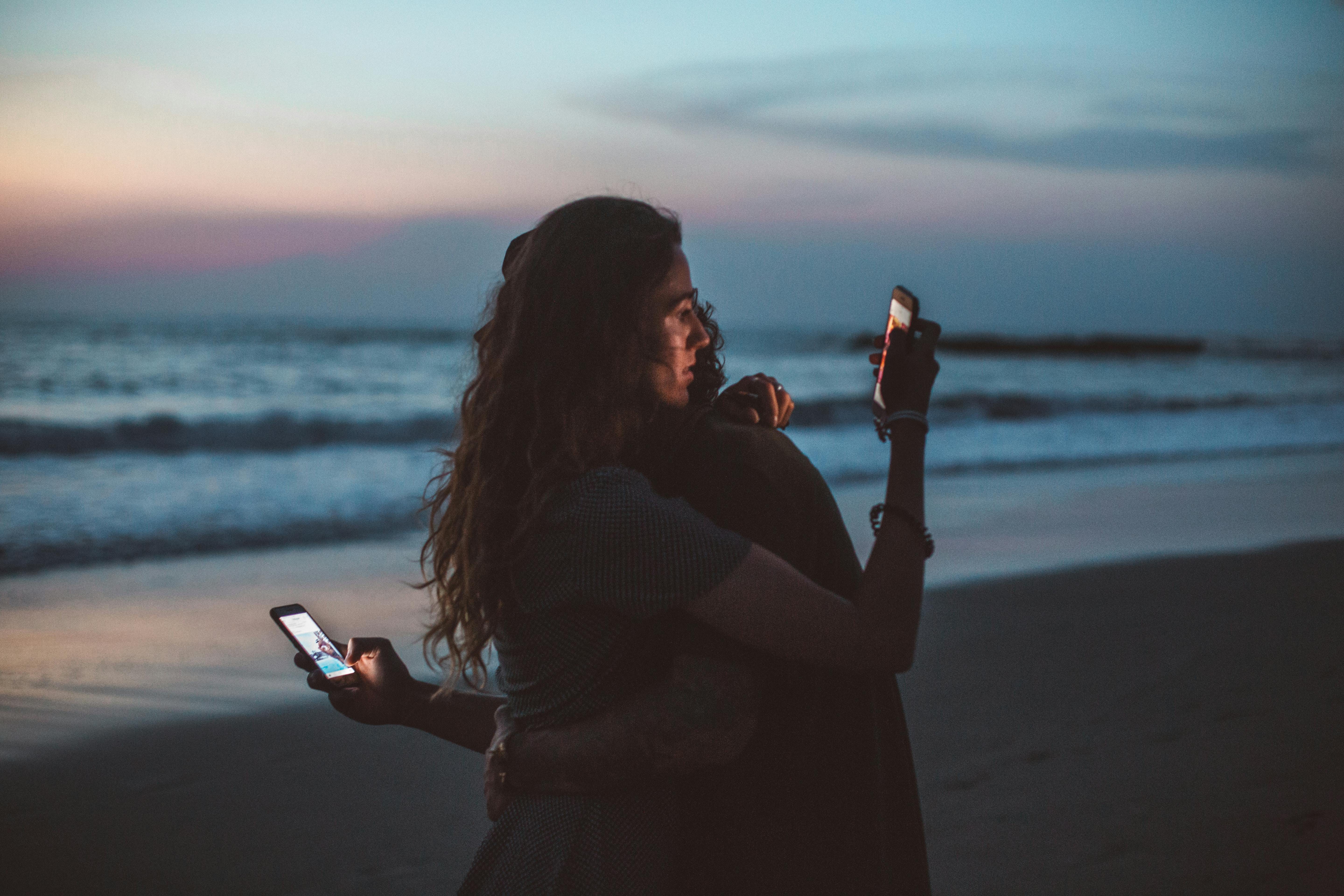
Our phones make us accessible to the outside world - constantly.
And with that, we receive all kinds of information all day round. Modern German communication culture is strongly shaped by sensationalism and polarisation, leaving much of these information pieces emotionally startling.
The average person in Germany spends about an hour and forty minutes a day on social media – for people aged between 18 and 24, the number climbs up to two hours a day. Given the fast-paced nature of these media, we can imagine the floods of information our brain and nervous system have to process during that time. And especially the emotions linked to the often sensationally loaded output can take a tremendous toll on us and throw our inner world out of balance.
The sensationalist nature of our discourse culture leaves us constantly on our toes, thrown from one emotional pool into the next. Behind every corner (or swipe) potentially awaits a new story to give our stress levels the next peak – and we just do not have it under control.
Our social media feeds function like ever-open doors to the outer world.
And by opening the app, we make ourselves accessible to these kinds of unfiltered information, whether we actively realise it or not. And every consumed output affects our energy levels, potentially leaving us startled for the rest of the day.
Due to that impact, I have recently started to actively regulate my time spent on social media – and that has turned out to be much harder than expected. It is quite shocking to find out how deeply implemented a scrolling habit can be. In the beginning, I often only noticed that I was on the app again after having opened it already – which tells us a lot about the automatised nature of an unhealthy habit. The beautiful thing is that just like everything else we are determined to work on, it gets better with time and repetition.
The commercial world does not appreciate us going offline.
The internet is the space where artificial needs are created. Where we grow the beliefs that there is something wrong about our appearance or the way we do things. Offline, we probably do not develop the same pressure to change – which inspires my theory that offline people might be less commercially interesting because they tend to be more at peace with themselves. And whenever we spend time online, this aspect is present.
Finding the right dosage between staying informed and preventing our minds from being flooded is nowhere near easy.
We cannot afford to completely disconnect from what is happening in the world, but the source we draw our input from might potentially allow us to find a more balanced approach of consumption – one that does not cost us our inner peaceful state. Every bigger social media platform comes with the huge handicap that information is not filtered at all – which can throw us off very quickly. We do not get to have a say if we want to see what is being played out to us – at least not before being exposed to it first.
We do not owe anyone constant access to us and our own inner world.
We are allowed to regulate that access by mindfully selecting who is getting an invitation and who is denied entry. Staying accessible all day every day, for every imaginable input from anyone, will likely leave us drained – and looking at it from this perspective, it makes sense. Unless it is part of our job, we get to decide how we divide our time in on- and offline hours. We are not obliged to be accessible 24/7, and we certainly can stay appropriately informed without having our phone glued to our hand. And having intentional closing hours likely helps us stay in the good headspace we deserve.
Monday Editions publish every week at 10 a.m. CET - via mail subscription and online. Signing up is free - unless you decide to upgrade.
Are you enjoying Wholeheartedly? Feel free to pass this text along and share it with someone who might like it, too:
More to read:
📚 Wholeheartedly - Vol.1: lovingly curated text-photo-collection in typical Wholeheartedly-style. Available via ➡️ Books on demand, via ➡️ Amazon and everywhere else where you can get books.
☕️ Wholeheartedly Monday Editions: weekly texts with reflective essay - character. Find more editions ➡️ here.
🌏 Haltungsgeschichten (“Attitude Stories”): my new, bi-weekly article format (in German, only). Have a look ➡️ here.
♥️ Wholeheartedly-Subscription: There’s the possibility to support my work as an independent writer through a paid subscription (two models: either 5€ monthly or 50€ yearly, price depends a little bit on where you’re located though, for tax reasons). All texts older than 10 weeks become part of this publication’s archive and aren’t freely accessible any longer (if you’re part of the email list and you keep those emails, you can of course always come back to them instead). Through a paid subscription, you receive full access to the archive, as well as access to the podcast section which is constantly expanding and for paid subscribers only.